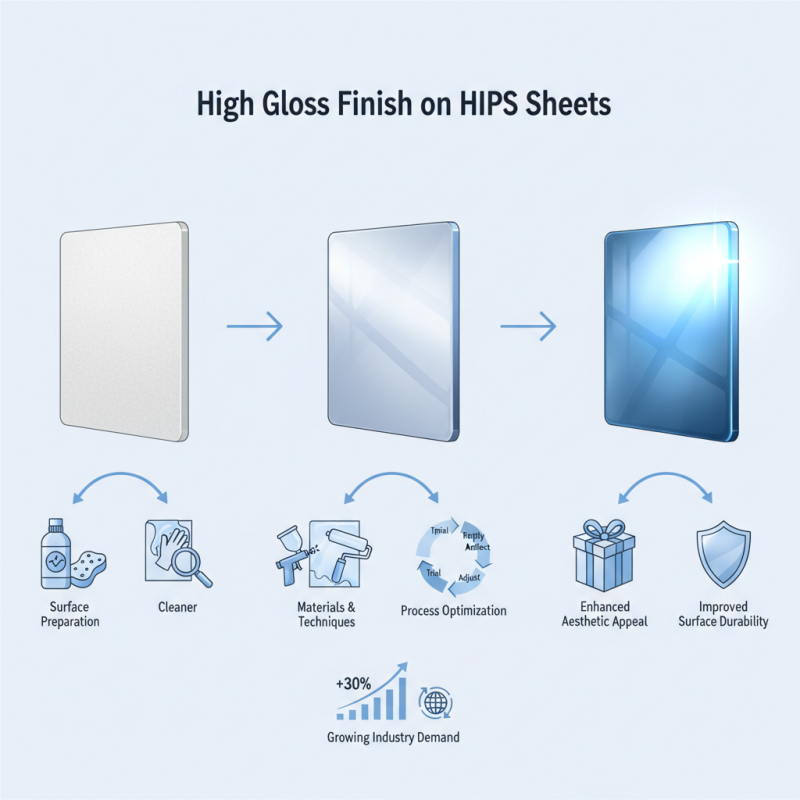
Achieving a high gloss finish on HIPS (High Impact Polystyrene) sheets is a crucial task in various industries, particularly in packaging and design. According to a recent industry report by the Global Federation of Plastics, the demand for high gloss finishes has increased by over 30% in the last five years. These finishes not only enhance aesthetic appeal but also improve surface durability.
Dr. Sarah Chen, a leading expert in plastics finishing, states, "Understanding the nuances of surface preparation is key to achieving high gloss finishes on HIPS sheets." This emphasizes the importance of meticulous attention to detail during the finishing process. Many professionals overlook the significance of surface cleanliness, which can lead to unsatisfactory results.
Transitioning to a high gloss finish requires the right materials and techniques. While there are standard practices, achieving the perfect outcome can often involve a level of trial and error. It’s essential to reflect on the methods employed and be open to adjustments. High gloss finishes can elevate products significantly but achieving them consistently may pose challenges. Understanding these complexities is vital for achieving the desired results.
Preparation of HIPS Sheets for High Gloss Finish
Achieving a high gloss finish on HIPS sheets starts with proper preparation. The surface must be clean and smooth. Any dust or debris can ruin the finish. A study by the American Plastics Council shows that surface preparation accounts for over 40% of the final aesthetic quality. Begin by washing the sheet with a mild detergent. Use a lint-free cloth to avoid scratches.
Sanding is another crucial step. Use fine-grit sandpaper, ideally 600-grit or higher. This creates a smooth base, enabling the gloss to adhere well. Inconsistent sanding can lead to dull patches on the surface. According to industry data, nearly 30% of gloss issues arise from improper sanding techniques. After sanding, ensure to clean the sheet thoroughly to remove any particles.
Once clean and sanded, polish the surface. A polishing compound specifically for plastics can enhance the gloss effect. Apply it evenly using a soft cloth. Avoid applying too much pressure, as this can cause uneven gloss. Even experienced professionals sometimes face challenges in achieving uniformity. Testing on a scrap piece of HIPS can help avoid mistakes.
Selecting the Right Tools and Materials for Polishing
Achieving a high gloss finish on HIPS sheets requires careful selection of tools and materials. Start with a quality sanding block and varying grit sandpaper. Many experts recommend starting with a 400-grit paper. This will create a smooth surface. Follow up with higher grits, such as 800 and 1200, for a refined finish. The goal is to minimize visible scratches and imperfections. A study from the Plastics Industry Association highlights that proper grit progression reduces surface flaws by over 30%.
Compounding is another crucial step in achieving that perfect sheen. A suitable polishing compound, typically a fine paste formulation, can work wonders. Look for compounds that are specifically designed for plastic surfaces. They often contain finer abrasive materials, which help achieve a clearer result. It's essential to use a soft applicator pad. This prevents additional scratches that can occur with harsher pads. However, even with the right tools, achieving an ideal gloss can be challenging. Improper technique can lead to an uneven surface.
Consider environmental factors as well. Humidity and temperature can affect the polishing process. These variables can lead to unsatisfactory results if not monitored. A recent survey among professionals in the field shows that nearly 25% struggle with environmental conditions impacting their polishing efforts. Being aware of these challenges can help craftsmen prepare better.
Step-by-Step Polishing Techniques for HIPS Sheets
Achieving a high gloss finish on HIPS sheets requires careful attention to detail and technique. Start by ensuring the surface is clean and free from any dust or debris. Use a gentle cleaning agent to wipe down the sheets. After cleaning, inspect the surface for scratches or imperfections that need attention. These flaws can affect the final gloss, so it is essential to address them promptly.
Next, employ a series of sanding techniques. Begin with a coarse-grit sandpaper to smooth out rough areas. Gradually work up to finer grits, such as 800 and 1000, to eliminate scratches. Keep the surface wet to minimize dust. The goal is to create a uniformly smooth surface. Remember, rushing this process can lead to uneven surfaces.
Finally, apply a polishing compound. Use a soft cloth or a polishing pad to buff the surface. Work in small sections to ensure even application. Achieving the desired shine might take several attempts, especially if the surface has complex curves or designs. Don't hesitate to reassess your technique, as every sheet can present unique challenges. Reflect on your results and adjust your approach accordingly for a flawless finish.
Applying Finishing Coats for Enhanced Gloss
Achieving a high gloss finish on HIPS sheets requires careful attention to detail in applying finishing coats. Start by choosing the right type of lacquer or polish. Ensure the surface is clean and free of dust. This initial step is crucial for a smooth application. When applying the coating, use even strokes to avoid streaking. It’s important to let each coat dry fully before adding the next, as rushing this process may lead to an uneven appearance.
Experiment with polishing techniques after the coats have dried. Buffing with the appropriate tools can enhance the gloss. However, inexperienced users may inadvertently create swirls or scratches. Always practice on a spare piece first. Keep in mind that humidity and temperature can affect drying times, so check the environment before starting. Recognizing these variables can help you achieve better results.
Sometimes, additional coats may be necessary to reach the desired sheen. Over-application can lead to drips or an overly thick layer. Strive for balance; thin, multiple layers often yield a superior finish. Reflect on your approach after each project to identify areas for improvement. This iterative process is vital for mastering high gloss finishes on HIPS sheets.
Tips for Maintaining the High Gloss Finish on HIPS Sheets
Maintaining a high gloss finish on HIPS sheets requires consistent care and attention. Dust, fingerprints, and environmental factors can easily dull the surface. Regular cleaning is crucial, but it's important to avoid harsh chemicals. Instead, use a soft microfiber cloth and a gentle soap solution. This helps preserve the glossy appearance without damaging the material.
When polishing your HIPS sheets, choose a product designed specifically for plastics. These products enhance the gloss while providing a protective layer. Apply the polish in a circular motion. However, be cautious not to over-apply, as it can leave a residue that detracts from the shine. It's essential to follow the manufacturer's instructions to avoid unintended consequences.
Humidity and temperature can also affect the finish. Maintaining a stable environment is beneficial. During extreme conditions, consider covering the sheets to protect the surface. Remember, a little bit of effort goes a long way in achieving and maintaining that desirable high gloss finish. Regular maintenance will keep your HIPS sheets looking their best over time.
FAQS
) Start with a quality sanding block and varying grit sandpaper, beginning with 400-grit.(Q) How does grit progression impact the polishing outcome? (A) Proper grit progression reduces surface flaws significantly, enhancing the final appearance.(Q) What type of polishing compound should be used? (A) Look for fine paste formulations designed for plastic surfaces to achieve clarity.(Q) Why is the choice of applicator pad important? (A) A soft applicator pad prevents additional scratches, improving the overall finish.(Q) How can environmental factors affect polishing? (A) Humidity and temperature can lead to unsatisfactory results if not monitored.(Q) What should be done before applying finishing coats? (A) Ensure the surface is clean and free of dust for a smooth application.(Q) How can uneven application be avoided when applying coatings? (A) Use even strokes and allow each coat to dry fully before adding another.(Q) What should you do if you experience swirls or scratches? (A) Practice on a spare piece before buffing to avoid damaging the surface.(Q) How many coats are ideal for achieving a high gloss finish? (A) Multiple thin layers are better than one thick coat; balance is key.(Q) What is the iterative process in mastering finishes? (A) Reflect on each project to identify areas for improvement and adjust techniques.
Conclusion
To achieve a high gloss finish on HIPS sheets, proper preparation is crucial. Start by cleaning the sheets thoroughly to remove any dust or contaminants, then smooth the surface with sandpaper to ensure an even base. Selecting the right tools and materials, such as polishing compounds and buffing pads, will significantly enhance the polishing process.
The step-by-step polishing techniques involve applying the compound in a circular motion, gradually increasing the speed and pressure. After achieving the desired sheen, applying finishing coats can further enhance the gloss and protect the surface. Finally, maintaining that high gloss finish requires regular cleaning and gentle care to avoid scratches. By following these guidelines, anyone can learn how to achieve a high gloss finish on HIPS sheets effectively.

 Benchmark Plastic