When considering packaging options, buyers often ask, "what is the shelf life of metallized PET film?" This question is critical for those in industries such as food and beverage, pharmaceuticals, and consumer goods. Metallized PET film is valued for its barrier properties and aesthetic appeal. However, understanding its longevity is essential for effective inventory management and product quality.
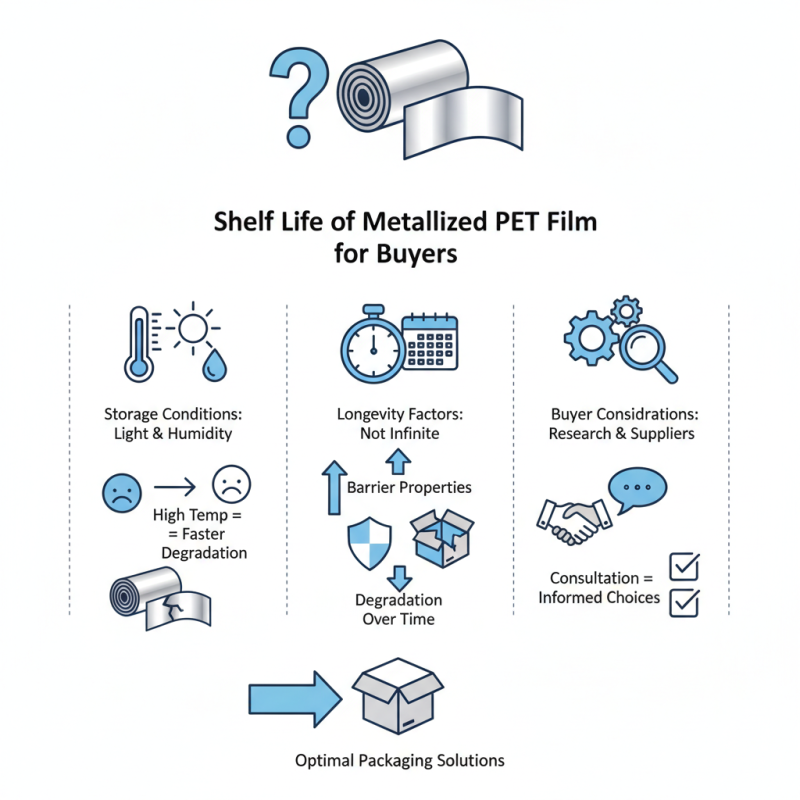
The shelf life of metallized PET film can vary based on several factors. These include storage conditions, exposure to light, and humidity levels. Buyers need to be aware that improper storage can lead to faster degradation. For instance, exposure to high temperatures can diminish its protective qualities. Therefore, it is vital to adopt optimal storage practices.
Buyers must reflect on the trade-offs involved. While metallized PET film offers numerous benefits, its shelf life is not infinite. Some products may require a more robust solution. Thorough research and consultation with suppliers can enhance understanding and provide clarity. Being informed will help ensure that the right materials are chosen for each specific application.
Understanding Metallized PET Film: Definition and Uses
Metallized PET film is a versatile material widely used in various industries. This thin polymer film is coated with a metallic layer, often aluminum. It offers excellent barrier properties against moisture and oxygen, enhancing product shelf life. According to the market report by Smithers Pira, the demand for metallized films is expected to grow by 6% annually through 2025.
Its applications include food packaging, insulation, and even electronics. For example, in the food sector, it keeps snacks fresher for longer. The metallic layer reflects light, providing an appealing aesthetic for products. However, some industries face challenges. The heat sensitivity of PET can limit its use in certain packaging processes. This requires careful consideration by manufacturers.
Understanding these nuances is crucial. Buyers must assess their specific needs. Knowledge of the film's temperature tolerance and chemical resistance can prevent costly mistakes. While metallized PET film offers many advantages, awareness of its limitations is equally important. Comprehensive evaluations ensure optimal use and quality in final products.
What Is the Shelf Life of Metallized PET Film for Buyers?
| Parameter |
Description |
Typical Shelf Life |
| Chemical Resistance |
Resistance to various chemicals and solvents, affects shelf-life. |
1-3 years |
| UV Resistance |
Ability to withstand UV light exposure. |
1-2 years |
| Moisture Barrier |
Resistance to moisture ingress, crucial for maintaining quality. |
2-5 years |
| Heat Resistance |
Ability to withstand high temperatures without degradation. |
1-3 years |
| Storage Conditions |
Ideal temperature and humidity for preserving film's properties. |
Temperature below 25°C and humidity below 50% |
Factors Affecting the Shelf Life of Metallized PET Film
Metallized PET film is widely used for packaging, insulation, and other applications. However, its shelf life can vary significantly. Several factors influence this longevity, primarily environmental conditions, storage methods, and film properties.
Temperature plays a crucial role. High heat can weaken the film, making it less effective. Humidity is another critical factor; too much moisture can lead to oxidation or degradation. Additionally, exposure to UV light can break down the structure of the film over time, limiting its protective qualities.
Proper storage is vital for maintaining the integrity of metallized PET film. Keeping the rolls in a cool, dry place can extend their usability. Regularly inspecting the film for any signs of damage, such as tears or discoloration, is important for quality control. Some may overlook these issues, assuming the material is still viable, but these small signs can indicate bigger problems ahead.
Typical Shelf Life Ranges for Metallized PET Film Products
Metallized PET film has become an important material in packaging and insulation. Its typical shelf life varies based largely on storage conditions and product specifications. Most industry reports indicate a range of 6 months to 2 years for optimal performance. However, factors such as temperature, humidity, and exposure to light can significantly alter this.
Research from the Flexible Packaging Association highlights that exposure to high temperatures can degrade metallized films more rapidly. The film's barrier properties may decline, leading to compromised integrity. A study found that films stored in cooler, controlled environments maintained their qualities longer than those subjected to fluctuating temperatures. It's vital for buyers to consider these elements when assessing shelf life.
While the stated shelf life provides a guideline, actual performance can vary. Even within the recommended period, the quality may not be consistent. Variations in manufacturing processes can also lead to discrepancies in longevity. Users should regularly inspect stored materials, ensuring they can meet their application needs effectively. The importance of proper storage cannot be overstated; effective practices can extend shelf life and maintain product quality.
Storage Conditions to Extend the Shelf Life of Metallized PET Film
Metallized PET film is a popular choice in packaging due to its excellent barrier properties. However, its longevity is highly influenced by storage conditions. Ideal storage conditions significantly extend its shelf life. Keeping the film in a cool, dry place prevents moisture absorption, which can compromise its integrity. Research indicates that temperatures above 25°C can lead to degradation, while relative humidity should ideally be below 50%.
Additionally, exposure to UV light can weaken the film's properties. Protecting metallized PET from direct sunlight is crucial. Using opaque, airtight containers for storage can mitigate UV damage. A study by the Packaging Institute highlighted that proper storage can double the shelf life of metallized films compared to suboptimal conditions. Regular inspections are also vital. Even minor signs of degradation can indicate potential issues, reminding users to monitor their stock carefully.
While many buyers focus on initial quality, storage factors often receive less attention. This oversight can lead to costly waste. For inventory management, tracking storage conditions regularly is essential. Implementing best practices for storing metallized PET film ensures reliable performance and efficiency in applications such as food packaging and electronics.
Signs of Degradation in Metallized PET Film Over Time
Metallized PET film is valued for its barrier properties and aesthetic appeal. However, these films can degrade over time, affecting their usability. One primary sign of degradation is the loss of metallic luster. When the shine diminishes, it indicates possible oxidation or contamination.
Another indication is the appearance of bubbles or blisters on the film's surface. These defects can develop due to heat exposure or moisture infiltration. If you notice any changes in color or transparency, the film may also be deteriorating. Discoloration can affect packaging effectiveness.
Consumers should conduct regular visual inspections. Storing metallized PET film in controlled conditions can prolong its lifespan. Always pay attention to storage temperature and humidity. These factors play a pivotal role in maintaining quality. Nonetheless, recognizing degradation signs early is crucial for optimal usage. Keep an eye out for subtle shifts, even if they seem minor. Over time, even slight changes can lead to significant issues.
FAQS
: It is a thin polymer film coated with a metallic layer, often aluminum.
It offers excellent barrier properties against moisture and oxygen, extending product shelf life.
Environmental conditions, temperature, humidity, and UV exposure all influence its longevity.
High heat can weaken the film, making it less effective for its intended use.
Most reports suggest a range of 6 months to 2 years, depending on storage conditions.
Storing in cool, dry places helps maintain integrity and usability over time.
Yes, exposure to humidity and UV light can lead to oxidation and degradation.
Look for signs of damage, such as tears or discoloration, to ensure quality.
Assumptions about viability without regular checks can lead to bigger issues.
Yes, actual quality may vary even within the stated shelf life due to manufacturing differences.
Conclusion
The article titled "What Is the Shelf Life of Metallized PET Film for Buyers?" provides a comprehensive overview of metallized PET film, including its definition and common applications. It delves into the factors that affect its shelf life, such as environmental conditions and exposure to light or moisture. Typically, metallized PET film products can have varied shelf life ranges depending on these influencing factors.
To extend the longevity of metallized PET film, proper storage conditions are essential. This includes keeping the film in a cool, dry place away from direct sunlight. Additionally, the article discusses signs of degradation over time, which can help buyers identify when the film may no longer be suitable for use. Ultimately, understanding these aspects is crucial for any buyer questioning, "what is the shelf life of metallized PET film?" as it influences their purchasing decisions and product performance.

 Benchmark Plastic