Plastic rolls can look dry while moisture quietly enters through exposed edges, damaged wrapping, or humid warehouse air. The risk depends on the polymer. Polyethylene and polypropylene generally absorb little moisture, while nylon can absorb substantially more. Ensinger’s TECAMID 6/PA6 data, for example, reports about 2.5% moisture absorption under standard atmospheric conditions; actual results depend on grade and conditioning. Small differences matter.
That is why “how to store plastic rolls to prevent moisture absorption” begins with identifying the resin, not choosing one rule for every roll. ASTM D570 provides a standard method for measuring water absorption in plastics, while ASTM F1249 measures water-vapor transmission through packaging films. These standards help compare materials; they do not prescribe warehouse conditions. Check the supplier’s technical data sheet and packaging guidance for the specific film or resin.
In practice, keep rolls in intact moisture-barrier packaging, seal opened liners promptly, and store them off concrete floors on clean pallets. Avoid placing rolls beside open loading doors, wash areas, or condensation-prone walls. Record room humidity and inspect packaging seams, especially after delivery or temperature changes. Keep the core dry, too.
It sounds simple. It isn’t always.
A sealed outer wrap can still trap moisture already inside, and a dry-looking roll may have an exposed core. Storage records and supplier instructions provide a useful starting point, but they cannot replace material-specific testing. That distinction is easy to overlook.
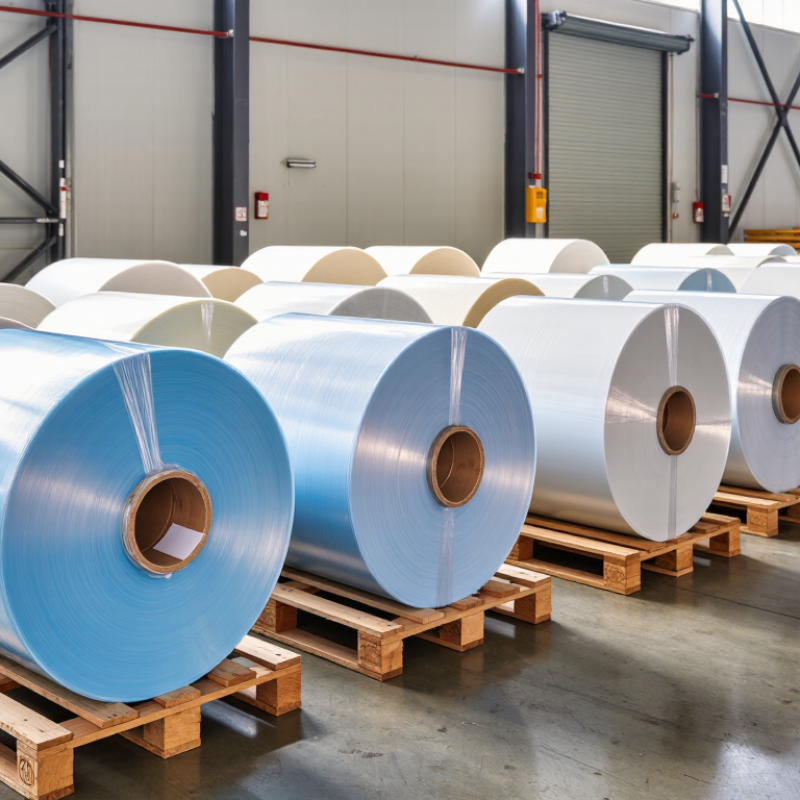
Plastic rolls do not all respond to moisture in the same way. Nylon and some polyester materials can absorb water into their structure, while polyethylene usually takes up very little. The exact behavior depends on the resin, additives, and how the film was made. Check the material specification when it is available.
Moisture can also collect on a roll’s surface without being absorbed. A cold roll brought into a warm, humid room may develop condensation, especially near exposed edges. That water can cause blocking, uneven unwinding, or defects during later processing. The distinction matters. A dry-looking surface is not proof that a moisture-sensitive polymer is dry inside; changes may be harder to see.
Store rolls in their original moisture-barrier packaging until use, and keep them off concrete floors and away from doors or damp walls. Stable temperature helps prevent condensation. If packaging is opened, reseal it promptly, and use a clean, dry area for handling. A humidity meter near the storage rack can reveal gradual changes that a quick glance misses. Desiccant may help inside sealed packaging, but it is not a substitute for suitable packaging or material-specific guidance. It is easy to blame a processing problem on moisture alone; confirm the resin’s requirements before changing storage or drying conditions.
| Plastic Type | Moisture Behavior | Recommended Storage | Checks Before Use |
|---|---|---|---|
| Nylon (PA) | Hygroscopic: absorbs moisture from the surrounding air, which can affect processing and product performance. | Keep the roll in its sealed moisture-barrier packaging until needed. Reseal opened packaging promptly and store it in a dry indoor area. | Check packaging integrity and follow the material supplier’s moisture limit and drying instructions. |
| Polyethylene terephthalate (PET) | Can absorb moisture. Excess moisture during melt processing may contribute to material degradation. | Store unopened rolls in sealed packaging in a clean, dry place. Protect opened rolls with a suitable moisture barrier. | Inspect for damaged packaging; use material-specific handling and drying guidance before processing. |
| Polycarbonate (PC) | Hygroscopic; moisture control is important, particularly before high-temperature processing. | Keep rolls sealed and away from damp floors, exterior walls, and sources of water. Limit exposure after opening. | Check the supplier’s recommended moisture level and drying procedure rather than relying on appearance alone. |
| Polypropylene (PP) | Generally absorbs little moisture compared with hygroscopic plastics, but surface water or condensation can still cause handling issues. | Store indoors in a clean, dry area and keep the roll wrapped to protect it from dust, splashes, and condensation. | Look for wet surfaces, damaged wrapping, or contamination before unwinding. |
| Polyethylene (PE) | Generally has low moisture absorption; moisture is more likely to be present on the surface or packaging than absorbed into the plastic. | Keep rolls covered and off the floor. Avoid locations where temperature changes may cause condensation. | Ensure the roll and its packaging are dry and clean before use. |
| All plastic rolls | Moisture risk increases with prolonged exposure to humid air, spills, leaks, or condensation. | Use a dry, sheltered indoor storage area; keep rolls on racks or pallets, away from direct contact with floors and walls. Maintain sealed packaging where practical. | Inspect packaging, storage area, and roll surfaces. Allow cold rolls to reach room temperature while still wrapped before opening to reduce condensation risk. |
Note: Moisture sensitivity varies by polymer grade, additives, roll construction, and processing conditions. Follow the material supplier’s storage and drying specifications; visual inspection alone cannot confirm the moisture content of hygroscopic plastics.
No. Nylon and some polyester films can absorb water internally. Polyethylene usually absorbs very little. Resin and manufacturing details matter.
Yes. Moisture may be inside the material, while surface condensation can be hard to spot. Looks can mislead.
A cold roll entering a warm, humid room may collect water near its exposed edges. This can cause blocking or uneven unwinding.
Keep them on clean pallets, away from concrete, damp walls, and loading doors. Leave space around stacks for airflow. A few centimeters help.
Use a hygrometer instead of relying on touch. General indoor guidance suggests relative humidity below 60%, but film instructions should guide storage.
Use moisture-resistant barrier packaging and seal both ends continuously. Check the package’s measured performance, not just its thickness.
Not necessarily. Use one when the material or storage period calls for it, and keep it from touching the plastic. It is not a packaging substitute.
Look for torn wrapping, weak seals, condensation, leaks, and damp floor areas beneath pallets. Record humidity spikes; their cause may not be obvious.
No. I might blame moisture too quickly. Check the resin’s requirements before changing storage or drying conditions.
Plastic rolls can absorb moisture from humid air, damp surfaces, or temperature changes, which may affect their quality during storage. Knowing how to store plastic rolls to prevent moisture absorption begins with choosing a clean, dry area with stable conditions and good ventilation. Before storage, make sure the space and nearby surfaces are free of water, dust, and other sources of humidity.
Protect each roll with moisture-resistant packaging, sealing it securely to limit exposure to humid air. Place rolls on pallets or shelving so they remain off the floor, and leave space between them and walls to encourage airflow and reduce contact with damp surfaces. Check the storage area and rolls regularly for signs of condensation, damaged packaging, or moisture. Promptly address any issues to help keep the rolls dry and in good condition.

 Benchmark Plastic