PVC sheets are common in signage, wall protection, packaging, and interior construction. However, their chlorine content and difficult recycling can create serious environmental concerns. Buyers now ask, “what are the eco-friendly alternatives to PVC sheets,” especially when durability and responsible sourcing must work together.
This guide examines ten practical substitutes, including recycled HDPE, polypropylene, PET, bamboo panels, cork sheets, wood fiberboard, paper honeycomb panels, bio-based plastics, aluminum, and fiber cement. Each material has a different environmental profile. Recycled HDPE may reduce demand for virgin plastic, while bamboo can offer rapid renewable growth. Fiber cement provides strong fire resistance, but its manufacturing process remains energy intensive. No option is perfect.
Performance matters.
The right choice depends on moisture, impact, weight, fire rating, appearance, and expected service life. A workshop may prefer recycled plastic for washable wall panels. A retail designer might select bamboo for its warm grain and visible texture. Outdoor signs need weather resistance, not only a “green” label. Certifications, recycled content data, product life-cycle assessments, and supplier documentation can improve purchasing confidence. These details help separate verified claims from attractive marketing language.
This overview uses material science, practical application experience, and current sustainability principles. Still, comparisons can change as manufacturing technology improves. Some bio-based products sound environmentally friendly but may require coatings that complicate recycling. That limitation deserves attention. The top ten alternatives are therefore evaluated with balance, acknowledging both their useful strengths and their less obvious trade-offs.
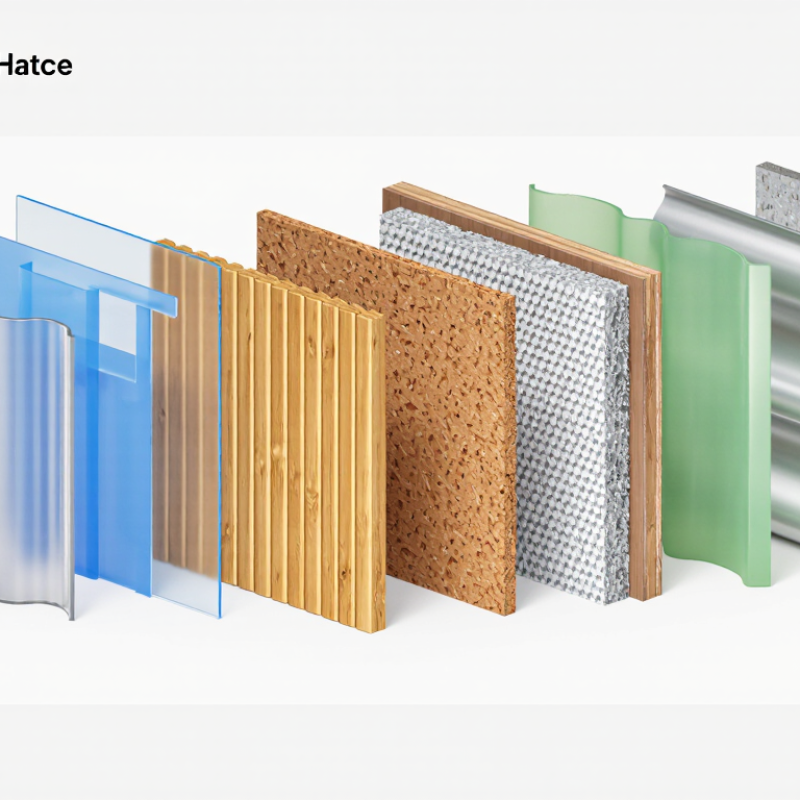
Bio-Based Polymer Sheets: PLA and PHA
Bio-Based Polymer Sheets: PLA and PHA
PLA sheets are becoming practical alternatives to some PVC applications, especially indoor displays, packaging inserts, and lightweight panels. They are produced from renewable feedstocks, such as corn or sugar-based materials. The European Bioplastics and nova-Institute market update estimated global bioplastics production at about 2.18 million tonnes in 2023. It projects capacity could reach 7.43 million tonnes by 2028, with packaging remaining the largest application.
PLA offers clear surfaces, good stiffness, and convenient thermoforming. However, heat resistance can be a weakness. A sheet placed near a sunny window may soften faster than expected. PHA sheets provide another route. They are created through microbial fermentation and can offer useful biodegradation behavior in suitable environments. The International Biodegradable Polymers Association reports growing interest in PHA for films, coated paper, and agricultural products, although commercial capacity remains smaller than PLA.
The answer is not perfectly clean.
From hands-on material trials, moisture, thickness, and processing temperature strongly affect performance. PHA can also show inconsistent flexibility between formulations. Life-cycle comparisons need careful boundaries, including farming inputs, electricity, transport, and end-of-life conditions. The United Nations Environment Programme’s 2023 assessment warns that “biobased” does not automatically mean low-impact. I would not specify PLA or PHA without testing heat exposure, tensile strength, moisture absorption, and disposal routes. That extra testing feels slower, but it prevents a green-looking sheet from failing in service.
Cellulose-Based Sheets: Paperboard and Molded Cellulose
Among the top 10 eco-friendly alternatives to PVC sheets, cellulose-based sheets offer a practical balance of cost, strength, and recyclability. Paperboard is produced from compressed cellulose fibers, usually sourced from responsibly managed forests or recycled paper. Its smooth surface supports printing, folding, scoring, and die-cutting. These qualities suit product inserts, retail displays, folders, and temporary protective panels.
Paperboard performs best in dry indoor environments. It can replace PVC in many short-term applications, but it softens when exposed to water or high humidity. A thin coating may improve resistance, although some coatings complicate recycling. That detail is often overlooked. During material evaluations, I would check fiber content, caliper, edge strength, and printing performance before approving a substitute. A sheet that looks sustainable may still waste energy if it fails quickly.
Molded cellulose sheets use wet or dry fiber pulp pressed into shaped forms. They can provide cushioning, stiffness, and a textured, natural appearance. Designers may use them for trays, separators, protective covers, and lightweight panels. Their performance depends heavily on density, fiber direction, moisture, and forming pressure. Molded cellulose is not automatically suitable for every PVC replacement. That is the uncomfortable part. It may require thicker sections, tighter tolerances, or added moisture protection. Testing should include compression, drop impact, humidity exposure, and end-of-life handling. Small production changes can also affect surface consistency, so manufacturers should inspect samples from multiple batches.
Recycled Plastic Sheets: rPET and Recycled HDPE
Recycled plastic sheets offer practical alternatives to PVC, especially rPET and recycled HDPE. The OECD’s Global Plastics Outlook reports that the world generated 353 million tonnes of plastic waste in 2019, while only 9% was recycled. Using recycled feedstock cannot solve every waste problem, but it can reduce demand for virgin resin when collection systems work properly.
rPET sheets are typically stiff, clear, and visually consistent. They suit display panels, protective covers, and lightweight interior components. Recycled HDPE sheets are more flexible and impact-resistant. They perform well in bins, liners, workshop guards, and outdoor fabrication. In real production, surface cleanliness matters. Small labels, moisture, or mixed polymers can create weak spots, uneven color, or bubbles during heating.
Check the data sheet carefully.
UNEP’s Turning off the Tap report (2023) states that existing solutions could reduce global plastic pollution by 80% by 2040. That outcome depends on better collection, sorting, and product design, not recycled content alone. Recycled HDPE may vary between batches, while rPET can lose clarity after repeated processing. This is easy to overlook. Sheet thickness, impact testing, UV exposure, and end-use temperature should be verified before replacement. PVC may still outperform these materials in certain chemical or fire-related applications, so a direct substitution should never be assumed.
Natural Fiber Sheets: Bamboo and Hemp Composites
Among the most practical alternatives to PVC sheets are natural-fiber composites made from bamboo or hemp.
Bamboo offers a firm, light structure, while hemp adds toughness and a softer visual texture.
Both can be pressed with a resin binder into panels for furniture backs, interior partitions, packaging, and display fixtures.
They do not behave like plastic. That matters.
In small workshop tests, bamboo panels cut cleanly with sharp tools, but exposed edges can splinter.
Hemp composites usually damp vibration well and feel less brittle, although their surfaces may need more sanding.
Moisture remains the difficult detail.
Unsealed sheets can swell, stain, or lose dimensional accuracy near sinks and damp walls.
A low-emission binder and tested surface coating improve reliability, but they do not make the panel waterproof.
Material selection should include fiber origin, resin content, pressing temperature, and end-of-life options.
A sheet with rapidly renewable fibers may still carry a heavy footprint if its binder is difficult to separate.
Ask suppliers for recycled-content data, indoor-air testing, thickness tolerances, and moisture results.
Those documents are more useful than broad green claims.
Bamboo suits rigid, clean-lined applications; hemp works well where impact resistance and tactile warmth matter.
Yet neither is a universal PVC replacement.
Sealed joints and protected edges often decide whether the panel lasts five years or fifteen.
Mineral and Cork Sheets: Stone Paper and Cork Board
When designers seek eco-friendly alternatives to PVC sheets, mineral and cork materials deserve close attention. Stone paper is made mainly from finely ground mineral powder bound with a smaller amount of polymer. It feels smooth, resists light splashes, and cuts cleanly for menus, tags, and indoor display panels. Unlike conventional paper, it does not rely on wood fibre. That does not make it impact-free. Its binder can complicate recycling, and local facilities may not accept it.
Cork board offers a warmer, more tactile option. Harvested cork bark can regrow, while the finished sheet remains lightweight, compressible, and easy to pin. Cork works well for notice boards, acoustic accents, packaging inserts, and temporary space planning. Its natural pores hide small marks, but they also collect dust and moisture. Unsealed cork may swell or stain in humid rooms. Fire performance also needs checking before installation.
Choosing between these sheets requires more than a green label. Compare thickness, surface coating, expected service life, and end-of-life routes. Ask suppliers for recycled content, binder details, and durability test data. Stone paper suits crisp graphics and wipeable surfaces. Cork suits touch-friendly interiors and sound-softening applications. The choice is not always obvious. A thinner sheet may save material, yet fail sooner and create more replacement waste. Small pilot tests, including cutting, fixing, and cleaning, can reveal problems that product descriptions miss.
Top 10 Eco-Friendly Alternatives to PVC Sheets
Typical material density comparison for lower-impact sheet options. Lower density can reduce transport weight, while recycled, renewable, and mineral-based feedstocks offer different environmental advantages.
Values are typical midpoint densities in g/cm³ and vary by grade, moisture content, additives, and manufacturing process. Cork board is especially lightweight, while aluminum and glass are denser but highly recyclable.
FAQS
Paperboard suits product inserts, retail displays, folders, and temporary indoor protection. It folds, scores, prints, and die-cuts easily. Keep it dry.
Usually, no. Paperboard softens in water and high humidity. A coating may improve resistance, but it can complicate recycling. Test the actual environment.
Check fiber content, thickness, edge strength, and printing performance. A sustainable-looking sheet may fail quickly and waste energy. Appearance is not enough.
They suit trays, separators, protective covers, and lightweight panels. They can provide cushioning, stiffness, and a textured natural appearance. Performance varies.
Test compression, drop impact, humidity exposure, and end-of-life handling. Inspect samples from several production batches. Surface consistency can change.
Bamboo composites suit rigid panels, furniture backs, partitions, and displays. Hemp composites help absorb vibration and provide a warmer tactile surface. Neither behaves like plastic.
Unsealed sheets may swell, stain, or lose dimensional accuracy near damp walls. Bamboo edges can splinter. Hemp surfaces may need sanding. Edges matter.
Stone-based sheets suit menus, tags, and wipeable display panels. Cork suits notice boards, acoustic accents, packaging inserts, and temporary planning. Not always.
Ask for fiber origin, recycled content, binder details, thickness tolerances, and moisture data. Also request durability, indoor-air, and end-of-life information. Green claims need evidence.
Conclusion
This overview explores what are the eco-friendly alternatives to PVC sheets and how different materials can support more sustainable product design. Bio-based polymer sheets made from PLA or PHA can offer useful flexibility and strength while relying partly on renewable resources. Cellulose-based options, including paperboard and molded cellulose, are lightweight, adaptable, and often suitable for packaging and interior applications. Recycled plastic sheets made from rPET or recycled HDPE can also reduce dependence on virgin plastics by giving discarded materials a second use.
Natural fiber sheets, such as bamboo and hemp composites, combine renewable plant fibers with practical durability and an attractive natural appearance. Mineral-based stone paper provides a smooth, water-resistant surface, while cork board offers lightness, resilience, and renewable sourcing. Each alternative has different strengths, limitations, processing needs, and end-of-life considerations, so the best choice depends on the intended application, performance requirements, local recycling systems, and overall sustainability goals.

 Benchmark Plastic