A plastic sheet can look simple: one flat panel, cut to size. Yet its price reflects much more than the resin. Resin grade, sheet thickness, color, surface finish, tolerances, and order volume all affect the quote. Cutting and drilling can add setup time and scrap. Then come protective film, pallet space, and freight. Small orders often carry a higher unit cost because these expenses are spread across fewer sheets.
The OECD’s Global Plastics Outlook reports that global plastics production reached 460 million tonnes in 2019, up from 234 million tonnes in 2000. That scale does not guarantee stable prices. Feedstock and energy costs shift, while supplier capacity, processing requirements, and delivery distance shape the final price. A quote may hide some of these drivers. Ask for a clear breakdown.
Procurement scholar Peter Kraljic titled his 1983 Harvard Business Review article “Purchasing Must Become Supply Management.” The idea fits this market: compare suppliers on total delivered cost, not sheet price alone. For buyers researching how to reduce costs in plastic sheet procurement, practical options include standardizing sizes, reviewing tolerances, consolidating orders, and checking freight terms. Still, not every saving is real. A cheaper grade may warp, waste more material, or fail the job. The uncomfortable part? Buyers do not always know until production starts. A careful comparison—and a small trial order—can reveal costs that a spreadsheet misses.
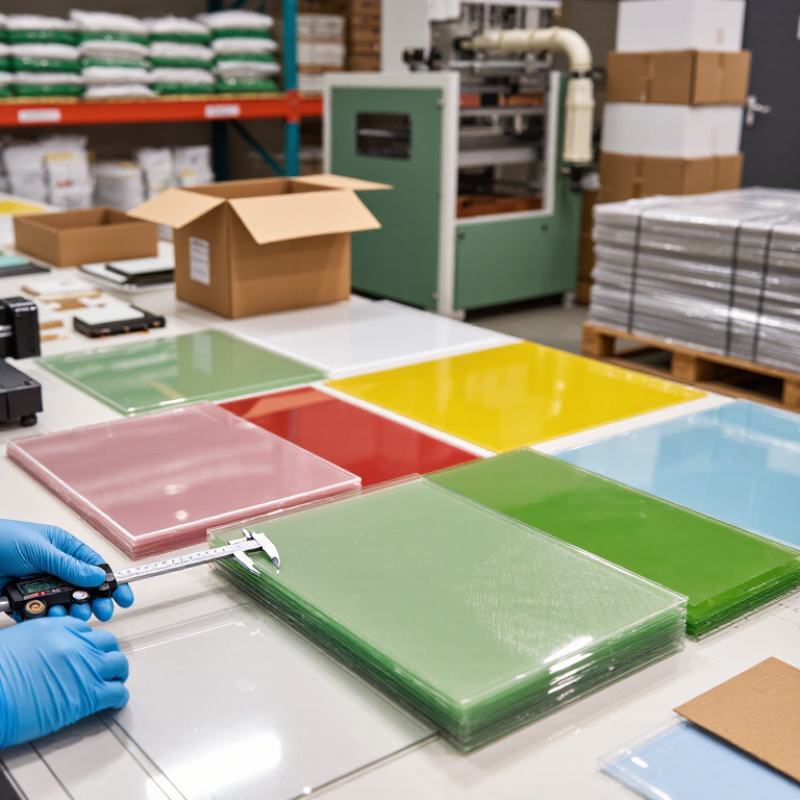
The base cost of a plastic sheet starts with its resin. Different polymers vary in price, density, temperature resistance, and impact strength. Even within one polymer family, a general-purpose grade may cost less than a UV-stabilized or food-contact grade. Recycled content can lower material costs, but its availability and consistency may vary. Small details matter. Colorants, flame-retardant additives, and protective surface layers also add material or processing costs.
Thickness and sheet size affect how much resin each sheet requires, so comparing prices by sheet alone can mislead. Ask for the weight per sheet or price per unit area, with thickness stated clearly. Manufacturing method, surface finish, and dimensional tolerances also influence the base price. Tighter tolerances may mean slower production and more inspection. Order volume matters too: larger runs can spread setup costs across more sheets, while custom sizes may require extra trimming. A useful quote should specify grade, dimensions, thickness, finish, and tolerance. Estimates still have limits; resin prices and production conditions can change between orders. A low unit price is not always the lowest-cost choice if the material does not suit the job.
| Cost Factor | What Determines the Cost | Typical Effect on the Quote | Example for Buyers |
|---|---|---|---|
| Resin Type | Polymer chemistry, performance, and the cost and availability of the underlying resin. | Commodity plastics are generally less expensive than specialty engineering plastics. Materials with higher heat, chemical, impact, or wear resistance usually cost more. | HDPE and polypropylene are commonly selected for economical general-purpose applications; polycarbonate, UHMW-PE, and high-performance polymers can have higher material costs. |
| Sheet Thickness | The amount of resin used per sheet, along with the production equipment and process required for that gauge. | Greater thickness usually increases material cost per sheet and shipping weight. The relationship may not be perfectly proportional because of production minimums and stock availability. | A 1/4-inch sheet generally contains about twice as much material per unit area as a 1/8-inch sheet of the same polymer. |
| Sheet Size and Cut Format | Standard stock dimensions, custom dimensions, cutting yield, and leftover material. | Nonstandard sizes may require custom production or create more unusable offcuts, increasing the effective cost per finished part. | Ordering parts that nest efficiently within a standard sheet can reduce scrap compared with buying individually cut, unusually sized blanks. |
| Grade and Specifications | Requirements such as UV stability, food-contact suitability, flame performance, electrical properties, or documented material traceability. | Special formulations, testing, documentation, or certification can add to the material and handling cost. | Specify only the certifications and performance properties the application actually requires; unnecessary requirements can narrow supply options. |
| Color, Finish, and Surface Protection | Custom color matching, textured or polished surfaces, protective masking, and special appearance requirements. | Standard colors and finishes are usually easier to source. Custom colors or less common finishes may involve setup costs or minimum order quantities. | Choosing a readily stocked color and finish can help avoid a custom-production charge or longer lead time. |
| Order Quantity | Supplier production minimums, setup costs, sheet count, and the ability to combine orders. | Small orders may carry a higher cost per sheet because fixed handling and setup costs are spread over fewer units. Larger orders may qualify for volume pricing. | Consolidating compatible requirements into one order may reduce per-sheet costs, provided the extra inventory can be stored and used. |
| Cutting and Secondary Processing | Saw cutting, CNC routing, drilling, thermoforming, edge finishing, and dimensional inspection. | Processed parts usually cost more than uncut sheets because of machine time, labor, setup, tooling, and material loss. | Compare the delivered price of cut-to-size parts with the cost of buying full sheets and processing them in-house, including scrap and labor. |
| Tolerance and Quality Control | Required dimensional precision, flatness, thickness consistency, inspection frequency, and rejection criteria. | Tighter tolerances can require slower processing, additional inspection, or selection of more consistent material, raising the purchase price. | Use tolerances that match the design and assembly needs instead of specifying precision beyond what the application uses. |
| Freight and Packaging | Sheet dimensions, shipment weight, delivery distance, protective packaging, and whether the order requires special handling. | Large or heavy sheets can be expensive to ship and may require palletized freight. Packaging that prevents scratches or warping can add cost. | Request a delivered quote and compare it with the material-only price; the lowest sheet price may not produce the lowest landed cost. |
| Availability and Lead Time | Local stock, supplier inventory, production schedules, resin supply, and urgency of delivery. | In-stock standard materials are often more economical than expedited, imported, or made-to-order sheets. Limited supply can reduce negotiating options. | Allowing a flexible delivery window and approving an equivalent stocked grade may help avoid rush charges. |
Resin type is a major factor. Grades with UV resistance or special additives may cost more. Small details matter.
Thicker sheets use more resin and may need heavier packaging. A 10 mm sheet typically costs more than a 3 mm sheet of the same size.
Yes. Oversized sheets can cost more to ship, and custom cutting adds labor. Offcuts from unusual shapes can also increase material waste.
They may differ in grade, color, surface finish, or additives. Compare the specifications, not just the polymer name.
Larger orders can spread setup costs across more sheets. Tighter tolerances may require slower production and extra inspection. It adds up.
Check grade, dimensions, thickness, finish, and tolerance. Compare price per area or sheet weight, too. Those details are easy to miss.
Resin costs, plant disruptions, freight, and exchange rates can shift prices. A sudden shortage may affect availability within days.
Yes. A different size may create more offcuts, or freight and cutting fees may raise the total. The cheapest quote may not fit the job.
The cost of plastic sheet procurement is shaped by more than the material’s quoted price. Resin type, quality grade, thickness, sheet dimensions, and performance requirements all affect the base cost. Thicker or larger sheets generally use more material, while specialized grades may require tighter specifications or offer particular properties that influence pricing. Manufacturing choices, such as cutting, machining, surface finishing, and other custom processing, can add further expense.
The final price also depends on packaging, shipping distance, delivery requirements, and order volume; larger or more consistent orders may help spread fixed costs. Meanwhile, changes in raw-material availability, energy costs, demand, and transportation conditions can cause prices to fluctuate. Understanding these factors helps buyers compare quotes on an equal basis, plan orders more effectively, and identify practical ways for how to reduce costs in plastic sheet procurement without compromising essential requirements.

 Benchmark Plastic