When a PET film wrinkles, pulls back, or leaves a seal area narrower than expected, the cause may be heat-related shrinkage. The question “why does PET film shrink during heat sealing” has no single answer. PET is often stretched during manufacture, and heat can release some of that stored orientation. The result depends on the film grade, thickness, prior heat treatment, and the temperature, pressure, and dwell time used at the sealing jaws.
Even a small process change can show up on the line. A hotter jaw, a longer dwell, or uneven contact may produce different results across the web. Tension and cooling conditions matter, too. It happens fast. But shrinkage is not always the only explanation: web movement, poor alignment, or a changing laminate structure can look similar. That distinction is easy to miss.
This guide explains the main mechanisms and shows what to check before changing the whole sealing setup. Compare affected and unaffected areas, record actual jaw settings, and review the film supplier’s technical data. Then test one variable at a time under controlled conditions. Small changes matter. Results can still vary between machines and materials, so a useful diagnosis should be verified on the production line, not assumed from appearance alone. The goal is practical: identify whether heat, tension, or another process factor is driving the defect, and make adjustments without compromising seal quality.
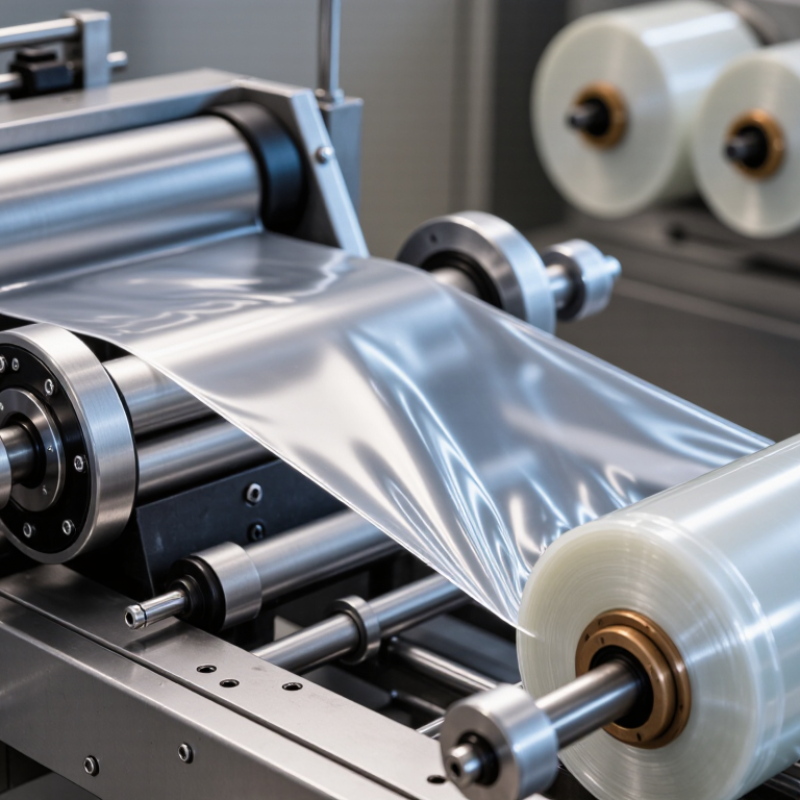
PET film is stretched in two directions during manufacture, aligning its polymer chains. This orientation makes the film strong and clear, but stores internal tension. When sealing heat reaches the film, some chains relax toward less-stretched positions. The sheet can contract, wrinkle, or pull away from a seal. The British Plastics Federation’s PET guide places its glass-transition temperature around 70–80°C. Above this range, molecular mobility increases; actual shrinkage depends on film grade, orientation, thickness, and heating time. That explanation is useful, but incomplete: seal-layer design and uneven jaw pressure also affect what operators see.
Tips: Check shrinkage at the actual sealing temperature and dwell time, not just in an oven. ASTM D1204 provides a method for measuring dimensional change in thermoplastic film at elevated temperatures. Keep a small sample beside the production line; compare machine-direction and cross-direction changes. Watch the edges. A modest temperature reduction or shorter dwell may help, but verify seal strength before changing settings.
PET does not respond identically across grades. A heat-stabilized film may shrink less than a highly oriented general-purpose film, yet no single shrinkage figure fits every structure. Record the film specification, seal temperature, pressure, and dwell time for each trial. Results can still be messy. Real production conditions rarely match a neat laboratory test.
A heated sealing jaw transfers energy to the film by direct contact. Heat crosses the outer PET layer, then reaches the sealant layer and nearby film. The surface warms first. The film’s core may remain cooler during a short sealing cycle. Pressure improves contact, while dwell time controls how long heat can travel through the layers.
PET film often contains polymer chains aligned during stretching. When heated, these chains gain mobility and can partly relax toward less-oriented positions, causing shrinkage. Polymer Data Handbook, 2nd edition, places PET’s glass-transition temperature around 70–80°C and its melting range near 250–260°C. Shrinkage can begin well below melting. The actual response depends on film orientation, thickness, coating, jaw temperature, pressure, and dwell time. Small process changes matter.
A jaw setting is not the film’s actual temperature. ASTM D1204 provides a method for measuring dimensional change in thermoplastic film under heat, helping compare materials under controlled conditions. Yet a test result cannot fully predict a fast, uneven production seal. That gap is easy to overlook. A cool-looking edge may still have absorbed enough energy to contract, especially where pressure or contact varies across the seal.
PET film is stretched during manufacture to orient its polymer molecules, improving strength and clarity. Some of that orientation remains as stored stress. When the film reaches a hot sealing bar, its molecules gain mobility and begin to relax. The material may contract, especially in the machine direction or across the web. That stress remains.
Tension can make the effect more noticeable. A moving web is pulled over rollers and held taut near the sealing area; heat can soften it while the tension remains. Once the film cools or leaves the constrained zone, it may retract or wrinkle. The result depends on temperature, dwell time, film thickness, prior processing, and how evenly tension is applied. Shrinkage is not always caused by the seal itself. A temperature profile or roller alignment issue can also contribute.
Tips: Check shrinkage in both directions using a marked sample and a controlled heat test. Compare results at the actual sealing temperature and dwell time. Reduce excessive web tension, and inspect seal-bar temperature across its width. Small adjustments help, though one variable at a time is easier to evaluate.
PET film can contract when sealing heat releases stress left from stretching during manufacture. The effect depends on the film’s orientation and heat-setting, not just its thickness. Heat-stabilized film usually shrinks less. Uneven heating can still cause visible distortion. Small changes matter.
Sealing temperature, dwell time, pressure, and web tension all influence shrinkage. Excessive heat or a long dwell gives the film more time to relax. Uneven seal-bar contact may create a curled edge or wavy surface. Tension matters too: a tightly pulled web can recoil as it cools. In laminates, adhesive layers and neighboring films may respond differently, shifting the package. Storage conditions are worth checking, but they should not be assumed to be the main cause without testing. Operators may need to adjust one setting at a time. It can be tempting to blame the film alone.
Tips: Test a short roll section before changing production settings. Record temperature, dwell, pressure, and tension. Measure shrinkage after cooling. If it persists, check the film’s dimensional-stability data and recommended sealing range.
PET film can shrink when sealing heat relaxes stresses created during stretching and winding. Reducing shrinkage starts with controlled heat, not simply turning the temperature down. Set the lowest seal-bar temperature that still creates a continuous seal, then adjust dwell time and pressure in small steps. A seal that looks closed may still be weak. Check it with peel tests and inspect for wrinkles or gaps.
Keep web tension steady as film enters the sealing area; excessive pull can encourage distortion once the material warms. Make sure the seal bars heat evenly, since a hot spot can shrink one edge while the other remains poorly sealed. Cooling matters, too. Support the film until the seal has set, rather than pulling it immediately through the next station. For coated or laminated PET, follow the film supplier’s processing range because its seal layer may respond differently from the PET base. Small trials help. Record the settings, film lot, and visible results, then repeat tests when material or line speed changes. Perfect consistency is difficult on a running line, and that is worth admitting.
| Factor | Why It Can Cause Shrinkage | Ways to Reduce Shrinkage | What to Monitor |
|---|---|---|---|
| Residual orientation stress | PET film is commonly stretched during manufacture. Heating can let some of this frozen-in molecular orientation relax, causing the film to contract, especially in the machine or transverse direction. | Select a PET grade with suitable heat stability and low shrinkage for the sealing temperature. Check the film supplier’s technical data and qualify the actual film structure before production. | Measure dimensional change in both film directions after exposure to the intended sealing conditions. |
| Excessive sealing temperature | A hotter seal jaw transfers more heat to the film. Higher film temperature can increase thermal relaxation and may distort layers in a laminate. | Use the lowest jaw temperature that still produces a reliable seal. Adjust temperature in controlled steps and confirm seal quality after each change. | Record actual jaw temperature, seal strength, seal appearance, and dimensional change. |
| Long dwell time | A longer seal cycle gives heat more time to penetrate the film, increasing the duration of thermal exposure even when the jaw temperature is unchanged. | Reduce dwell time where seal strength and leak performance remain acceptable. Avoid compensating for a poor seal by extending dwell without checking other settings. | Track dwell time alongside seal strength and shrinkage; change one process variable at a time during trials. |
| Uneven jaw temperature or contact | Hot spots, misalignment, or uneven pressure can create localized heating. This may produce wrinkles or uneven contraction across the seal area. | Inspect jaw alignment and sealing surfaces. Check temperature uniformity and use a consistent, even contact across the seal width. | Look for repeatable hot spots, wrinkles, and differences in seal appearance across the web. |
| Web tension during sealing | Tension can hold the film stretched while it is heated. When the film is released or cools, it may relax unevenly and appear to shrink or distort. | Use stable, appropriately low web tension through the sealing zone. Check unwinding, guiding, and tension-control settings for fluctuations. | Compare flatness and dimensions before sealing, immediately after sealing, and after the film has cooled. |
| Cooling and release conditions | If the film is released while still hot or is restrained unevenly as it cools, stresses can redistribute and cause curl, wrinkles, or dimensional distortion. | Keep film support and restraint consistent through cooling. Avoid pulling or sharply bending the sealed area while it is still warm. | Assess the package after cooling under consistent conditions, not only while it is still on the sealing jaws. |
| Film construction and thickness | Different PET grades, coatings, laminates, and thicknesses respond differently to heat. A sealing layer may soften at a different rate from the PET layer, affecting overall distortion. | Confirm that the film structure is designed for the sealing method and process window. Requalify settings whenever film construction or thickness changes. | Identify the film structure and thickness for each trial; compare shrinkage and seal performance across material lots. |
| Uncontrolled testing or process changes | Changing temperature, dwell, pressure, or tension at the same time makes it difficult to identify the cause of shrinkage and can hide trade-offs with seal integrity. | Run controlled trials, changing one variable at a time. Keep sample size, measurement method, and cooling conditions consistent. | Record process settings and measure dimensional change in both directions; also verify seal strength and leak performance. |
Note: PET shrinkage depends on film grade, construction, orientation, and actual thermal exposure. Establish limits using the specific film and sealing equipment; dimensional-change testing can be based on an applicable method such as ASTM D1204.
PET chains are stretched during manufacturing. Heat gives them more mobility, allowing stored orientation stress to relax. The film can contract.
No. Shrinkage can begin well below melting. PET’s glass-transition range is around 70–80°C, but actual behavior varies by film.
No. The jaw transfers heat through the outer layer toward the sealant. During a short cycle, the film’s core may stay cooler.
Longer dwell gives heat more time to travel through the layers. Pressure improves contact, but uneven pressure can create uneven heating.
Yes. A taut web may soften under heat, then retract as it cools or leaves the constrained area. That can create wrinkles.
Film orientation, heat-setting, thickness, coatings, and uneven jaw contact can all matter. In laminates, neighboring layers may respond differently.
Mark a film sample in both directions. Test it near the actual sealing temperature and dwell time, then measure it after cooling. Small changes matter.
Record temperature, dwell, pressure, and web tension. Inspect jaw contact across its width and check roller alignment. It is easy to blame the film, but that may be wrong.
This article explains why does PET film shrink during heat sealing by examining the material’s structure and response to temperature. Heat from the sealing jaws travels into the film, softening it and allowing molecular chains that were oriented during manufacturing to relax. If the film is also held under tension, this relaxation can cause it to contract, wrinkle, or distort near the seal.
The degree of shrinkage depends on factors such as sealing temperature, dwell time, pressure, film thickness, tension, and the film’s prior thermal history. The article also outlines practical ways to reduce unwanted movement, including using the lowest effective sealing temperature, limiting dwell time, maintaining consistent pressure and web tension, and allowing the film to cool evenly. Understanding these interactions can help improve seal quality and maintain a more stable package shape.

Benchmark Plastic